BODYWORK FORZE VI
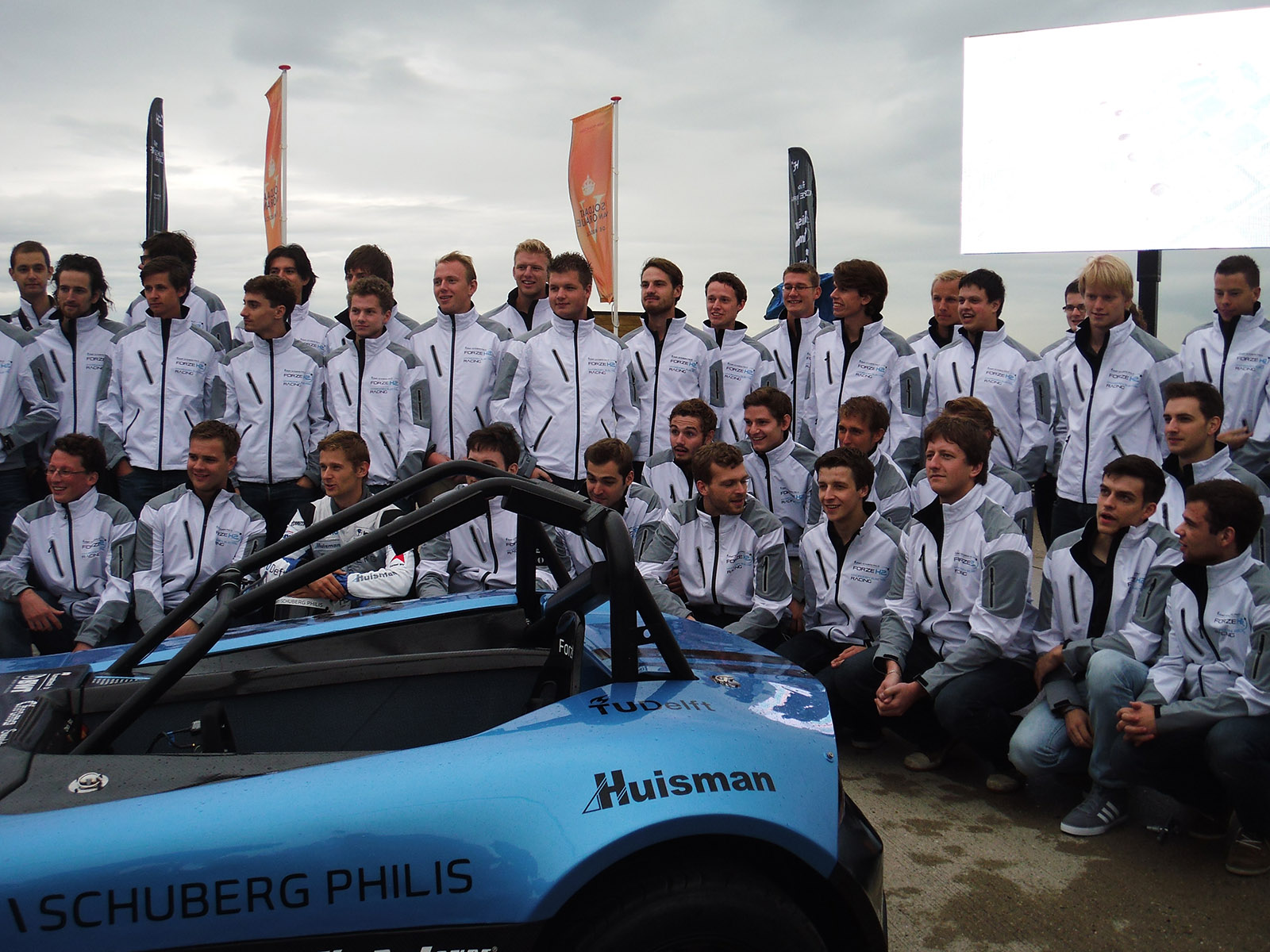
For a little more than a year I was the boardmember responsible for the external design of the Forze Hydrogen Racing Team's 6th car. I learned by doing.

A hydrogen fuel cell car
Forze VI is a hydrogen-fuell cell vehicle. The fuel cell acts as a on-board generator of 100kW. It uses hydrogen from the tanks and oxygen from the air to generate electricity to power the buffer of ultracapacitors and the motors. The final motor output power is 190kW.
The build
The car was designed to race in the Lotus Super 7 class, and the frame was adjusted to fit all the components of the fuell cell system. All together, it weights 860kg. It accelerates from 0 to 100 km/h in 4 seconds and can reach a top speed of 210 km/h.
Fastest hydrogen car at the Nurburgring; 10:43 minutes (by Jan Lammers)

MY SHARE IN THIS TEAMWORK
- Board member I gave lead to the Body & Aero department, consiting of approximately 12 part-time multidisciplanary students.
- Design engineering body It was my task to bridge the gap between designers that designed the shell of the car and engineers who developed the inner package.
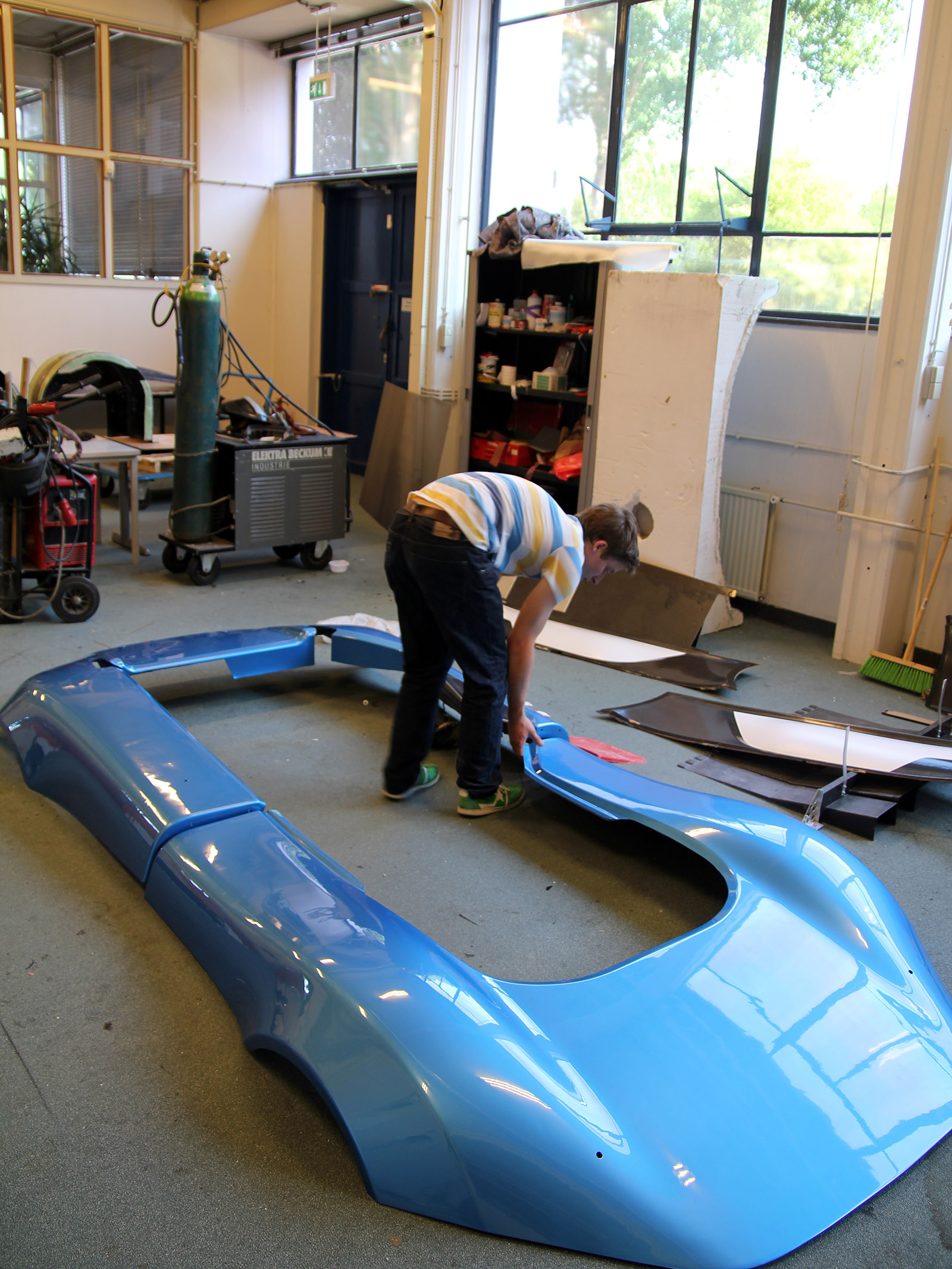
- Design for manufacturing I turned the design into parts and added all the functional details to make it a racing car bodywork.
- Aerodynamics The team had no experience before in using aerodynamics into a design cycle. This was the first year that we started with wind-tunnel testing and CFD calculations.
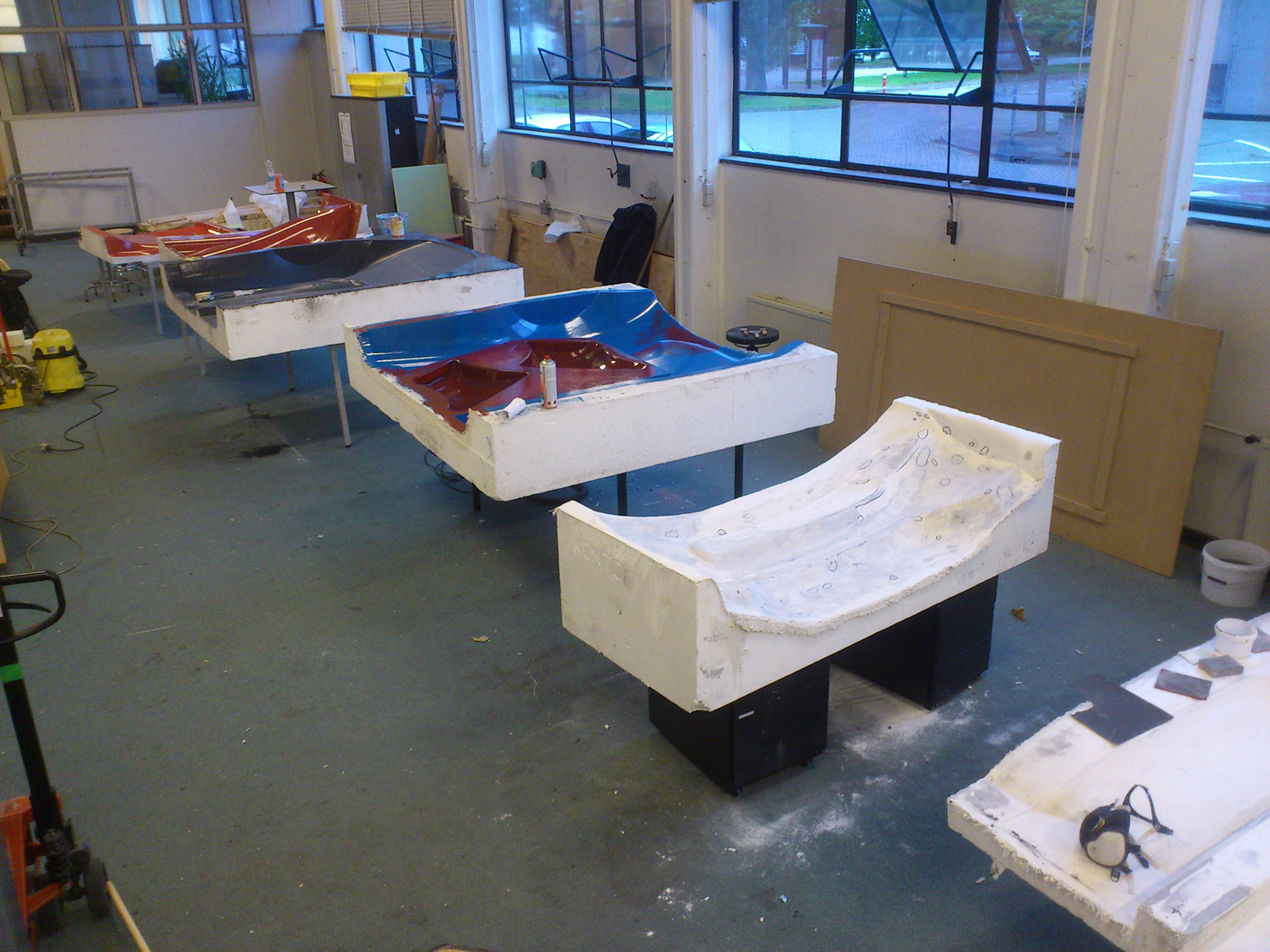
- Production method innovation To keep costs low, we experimented with molds out of fiber-reinforced acrylic-paste (strength and detail) coated onto polystyrene. (speed and volume)
- Rendering and digital showcasing.